
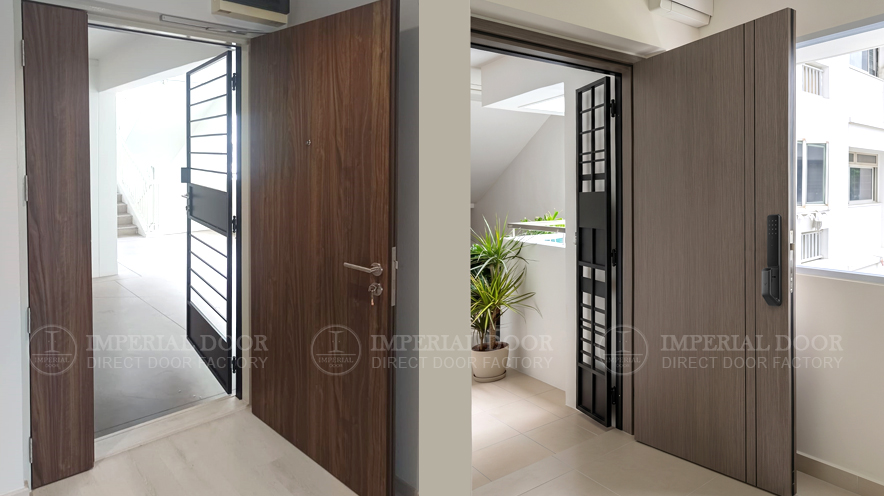
A front door performs several essential functions: it shields the home from heat, wind, and noise while providing a secure entry point for occupants. At the same time, it preserves privacy and protects against unwanted intrusion. Throughout its lifespan, a front door is exposed to impacts, scratches, and general wear. Its durability depends not only on the materials used but also on how it is maintained. Different materials respond differently to long-term use — some deteriorate quickly, while others remain resilient for years. In many residential layouts, a wide range of doors is used. Some may appear stylish but degrade quickly, while other can stay sturdy for years if taken with minimal care. When choosing a main door gate in Singapore, consider appearance, strength, and maintenance.
Picking the Right Door Material Matters Most
Wooden Doors
Wood offers a natural, warm, and timeless appearance. When properly maintained, wooden doors can last 30 to 40 years. However, if left unprotected, wood may rot, swell, or warp due to moisture. Regular staining or sealing every few years is essential.
Hardwoods generally offer better durability than softwoods, but even the strongest wood can weaken under heavy rain or harsh sunlight. With proper cleaning, timely repairs, and adequate sealing, wooden doors can deliver long-lasting performance.
Laminate Doors
Laminate doors feature a tough protective surface that resists water, scratches, stains, and dents. High-quality laminate can last over 50 years with minimal maintenance. It does not peel or fade easily, though low-grade laminate may crack under strong sunlight.
Laminate is a popular choice for main door gates in Singapore because it remains neat and colour-stable for years. High-pressure laminate offers even greater strength and durability, while requiring very little upkeep.
Thick Baseboard Doors
These doors come with a solid build. They stay firm for 20 to 50 years when painted or sealed. If left raw, they may rust or crack. Still, once sealed, they keep their shape.
Thick baseboard doors don’t break easily. They carry weight and still close tightly. If people keep them painted, they stay strong for decades.
Solid Timber Doors
Solid timber doors offer excellent longevity and a premium look. With regular oiling or staining, they can last well beyond 50 years. Without proper treatment, moisture can cause structural damage.
Timber offers both beauty and security, but it requires consistent care. Owners must inspect for dents, prevent moisture exposure, and maintain protective coatings to ensure long-term durability.
Solid Core Doors
Solid core doors are built to resist dents, impact, and noise. They typically last 25 to 50 years, depending on the quality of both the core and the outer surface. Even a strong interior can fail if the exterior laminate or veneer is damaged.
Regular cleaning, sealing, and edge protection help extend their lifespan. While solid core doors are often more expensive, they provide superior strength and insulation.
Fibreglass Doors
Fibreglass doors are strong, lightweight, and resistant to rust and moisture. They can last 30 to 50 years with minimal upkeep. A simple wipe-down is usually enough to keep them clean.
However, some fibreglass finishes may fade or crack after prolonged exposure to strong sunlight. Darker colours or shaded installations can reduce this risk.
Composite Doors
Composite doors combine multiple materials to achieve both durability and an attractive finish. They typically last 20 to 30 years and are resistant to rot and rust.
However, extreme temperature changes may cause warping. Composite doors perform best in stable environments where drastic heat shifts are minimal.
External Elements That Shorten Door Life
Door longevity depends greatly on how it is treated, but external environmental factors also play a major role.
Moisture
Water seeps into cracks. It causes swelling, loosens adhesives, rusts metal parts, and damages paint. Unresolved moisture accelerates structural deterioration.
Heat and Cold
Extreme temperatures cause expansion and contraction. Over time, this leads to warping, cracking, and misalignment.
Sunlight
Direct sunlight fades colours, weakens finishes, and degrades certain materials. Long-term UV exposure can cause peeling or cracking.
Wind and Dust
Strong winds can produce impact damage, while dust accumulates in hinges and surface textures, causing scratches, friction, and squeaking.
Tips to Help Doors Stay Strong Longer
A well-maintained door lasts significantly longer. The following tips help reduce damage and extend life.
Clean the Surface
Wipe the door regularly with a damp cloth to remove dust and grime that can scratch surfaces.
Check Hinges
Loose or rusty hinges cause sagging and misalignment. Tighten screws and lubricate them periodically.
Inspect Weather Strips
Weather stripping prevents water, wind, and dust from entering. Replace worn strips promptly to maintain insulation and protection.
Add Sealants
Sealers protect surfaces from moisture and dirt. Reapply them every few years. Choose the right type based on the door material.
Repaint or Restain
Paint and stain act as protective coatings. Refreshing them enhances appearance and shields the door from environmental damage.
What to Think About Before Choosing a Front Door
Before purchasing a front door, consider cost, maintenance requirements, and expected durability. Lower-cost options may offer short-term savings but often require earlier replacement. Higher-quality doors usually last longer, provide better insulation, and require less upkeep.
For main gates in Singapore, water resistance, dust protection, and security are key priorities. Strong locks, thick panels, and robust materials make a front door more reliable. Choosing a door that complements the home’s style while meeting practical needs ensures long-term satisfaction.
Conclusion
A front door is opened and closed countless times each day, and every action gradually contributes to wear and tear. However, with the right material choice and regular care, a front door can last for decades. Wood, laminate, fibreglass, steel, and composite alternatives each offer unique benefits — some are easier to maintain, while others provide superior strength or long-lasting aesthetics.
Ultimately, a door’s longevity depends on how well it is used and maintained. Small habits — like cleaning dust, sealing surfaces, and repairing minor damage early — help preserve both function and appearance. With proper care, a front door will stand strong for many years, protecting the home, elevating its style, and delivering reliable performance throughout its lifetime.